
For every clothing retailer, choosing the right products is one of the most important business decisions. Even if your store has a great location, attractive displays, and competitive pricing, your success ultimately depends on stocking garments that customers actually want to buy.
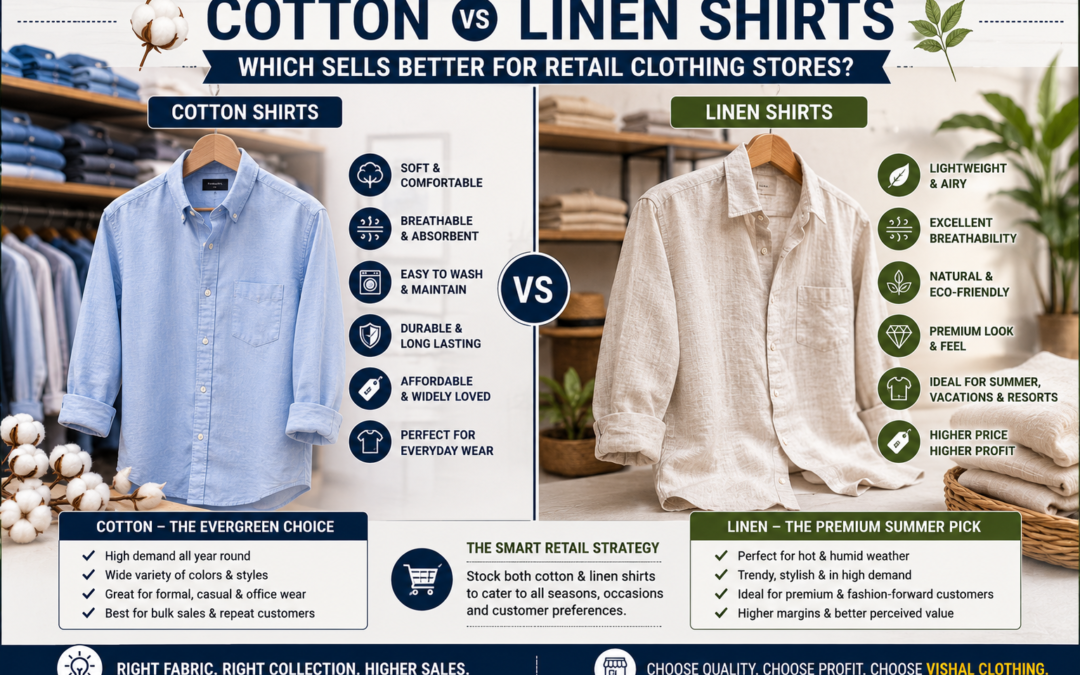
When it comes to men’s shirts, two fabrics consistently remain among the most popular choices—cotton and linen. Both have a loyal customer base, both are comfortable to wear, and both can generate excellent sales when stocked correctly. However, many retailers often ask the same question:
Which fabric sells better—cotton or linen?
The answer isn’t as simple as choosing one over the other.
Each fabric offers unique advantages and appeals to different customer preferences, occasions, climates, and price ranges. Understanding these differences helps retailers make smarter inventory decisions, improve customer satisfaction, and maximise profits.
Whether you’re opening a new clothing store, expanding your inventory, or purchasing wholesale garments for the upcoming season, this guide will help you compare cotton and linen shirts from a retailer’s perspective.
We’ll look at customer demand, comfort, durability, pricing, seasonal popularity, profit margins, and buying trends to help you decide which products deserve more space on your shelves.
Contents
- 1 Why Fabric Choice Matters in Retail Clothing
- 2 Understanding Cotton Shirts
- 3 Why Cotton Shirts Are a Safe Investment for Retailers
- 4 Understanding Linen Shirts
- 5 Why Customers Love Linen Shirts
- 6 Cotton vs Linen: Comfort Comparison
- 7 Cotton vs Linen: Style Comparison
- 8 Cotton vs Linen: Durability Comparison
- 9 Cotton vs Linen: Pricing Comparison
- 10 Which Fabric Generates Better Profit Margins?
- 11 Seasonal Demand: When Do Cotton and Linen Sell Best?
- 12 Customer Buying Behaviour
- 13 Cotton vs Linen: Which One Sells Better?
- 14 How Should Retailers Balance Their Inventory?
- 15 Common Mistakes Retailers Make
- 16 Expert Advice from Vishal Clothing
- 17 Why Retailers Choose Vishal Clothing
- 18 Frequently Asked Questions
- 19 Final Verdict: Cotton or Linen?
Why Fabric Choice Matters in Retail Clothing
Many retailers focus mainly on colours, designs, and pricing while selecting inventory.
Although these factors are important, the fabric itself often influences whether a customer completes a purchase.
Today’s buyers are more informed than ever.
They don’t simply ask:
“Does this shirt look good?”
They also ask:
- Is it comfortable?
- Will it last long?
- Is it suitable for summer?
- Will it shrink after washing?
- Is it worth the price?
Customers increasingly understand different fabrics and expect retailers to recommend products that match their needs.
When you stock the right fabrics, you can:
- Improve customer satisfaction
- Reduce product returns
- Build customer trust
- Increase repeat purchases
- Strengthen your store’s reputation
For this reason, understanding cotton and linen is essential for every clothing retailer.
Understanding Cotton Shirts
Cotton has remained one of the world’s most popular clothing fabrics for decades.
It is produced from natural cotton fibres, making it soft, breathable, and suitable for everyday wear.
Because of its versatility, cotton shirts appeal to students, office professionals, business owners, travellers, and casual shoppers alike.
This broad customer appeal is one of the reasons cotton continues to dominate retail clothing stores.
Why Customers Love Cotton Shirts
Cotton offers several benefits that make it a reliable choice throughout the year.
Soft and Comfortable
One of cotton’s biggest advantages is comfort.
The fabric feels soft against the skin and becomes even more comfortable after repeated washing.
Customers who wear shirts for long working hours often prefer cotton because it remains comfortable throughout the day.
Excellent Breathability
Cotton allows air to circulate naturally.
This helps regulate body temperature and makes cotton shirts suitable for warm weather.
Although cotton absorbs moisture, it also allows heat to escape, keeping wearers more comfortable than many synthetic fabrics.
Easy to Maintain
Another reason cotton remains popular is its low maintenance.
Customers appreciate garments that are:
- Easy to wash
- Easy to iron
- Durable
- Suitable for regular use
Busy professionals and families often choose cotton simply because it fits their daily lifestyle.
Wide Variety of Styles
Cotton is incredibly versatile.
Retailers can offer cotton shirts in numerous styles, including:
- Formal shirts
- Casual shirts
- Checked shirts
- Printed shirts
- Oxford shirts
- Mandarin collar shirts
- Half-sleeve shirts
- Full-sleeve shirts
This flexibility allows retailers to cater to different customer segments using the same fabric.
Why Cotton Shirts Are a Safe Investment for Retailers
From a business perspective, cotton shirts offer several advantages.
Consistent Year-Round Demand
Unlike some seasonal products, cotton shirts sell throughout the year.
Although sales may increase during summer, customers continue purchasing cotton shirts during every season because they are suitable for offices, colleges, meetings, and everyday wear.
This steady demand helps retailers maintain healthy inventory turnover.
Appeals to Every Age Group
Cotton shirts are popular among:
- College students
- Young professionals
- Office employees
- Business owners
- Middle-aged customers
- Senior buyers
Very few products attract such a wide audience.
Easier Inventory Planning
Because cotton shirts sell consistently, retailers can confidently maintain larger stock levels.
Basic colours such as:
- White
- Sky Blue
- Navy
- Black
- Grey
continue generating sales year after year.
Understanding Linen Shirts
Linen is another natural fabric that has gained significant popularity in recent years.
Made from flax fibres, linen is known for its lightweight feel, natural texture, and premium appearance.
Unlike cotton, linen is often associated with luxury, relaxed elegance, and summer fashion.
Customers frequently choose linen shirts for:
- Vacations
- Beach holidays
- Outdoor events
- Summer weddings
- Resort wear
- Weekend outings
This premium image has helped linen become one of the fastest-growing categories in men’s fashion.
Why Customers Love Linen Shirts
Superior Breathability
One of linen’s greatest strengths is airflow.
The loose weave allows heat to escape easily, making linen one of the coolest fabrics available for hot climates.
This makes linen shirts particularly attractive during Indian summers.
Premium Appearance
Linen has a distinctive natural texture that gives it a sophisticated look.
Unlike perfectly smooth fabrics, linen develops subtle wrinkles that many customers consider part of its charm.
This relaxed elegance appeals to buyers looking for premium casual clothing.
Lightweight Feel
Many customers immediately notice how light linen feels compared to heavier fabrics.
The lightweight construction makes it comfortable for:
- Outdoor events
- Holiday travel
- Long summer days
- Casual gatherings
Growing Fashion Trend
Over the last few years, linen has become increasingly popular among younger professionals and fashion-conscious consumers.
Social media, travel influencers, and celebrity fashion have all contributed to the rising demand for linen clothing.
Retailers who introduce linen collections often attract customers looking for something modern and premium.
Cotton vs Linen: Comfort Comparison
When customers compare cotton and linen shirts, comfort is usually one of the first considerations.
Cotton
Cotton feels softer immediately after purchase and offers a smooth texture that suits daily wear.
Many customers prefer cotton because it feels familiar and comfortable from the first use.
Linen
Linen initially feels slightly firmer than cotton but becomes softer after repeated washing.
Its greatest advantage is breathability.
Even during extremely hot weather, linen helps the body stay cooler because air flows more freely through the fabric.
Winner for Everyday Comfort
For year-round daily use, cotton remains the preferred choice for most customers.
Winner for Summer Comfort
For extremely hot weather, linen offers superior cooling and breathability.
Cotton vs Linen: Style Comparison
Both fabrics create different visual impressions.
Cotton Creates
- Clean appearance
- Formal styling
- Office-ready look
- Structured finish
Linen Creates
- Relaxed elegance
- Premium casual appearance
- Holiday fashion
- Resort-style clothing
- Luxury summer wear
The choice depends largely on the customer’s lifestyle and intended use.
Cotton vs Linen: Durability Comparison
Durability is one of the biggest concerns for customers purchasing shirts. No one wants to invest in clothing that loses its shape, fades quickly, or wears out after a few washes.
For retailers, selling durable garments means fewer customer complaints, better reviews, and higher repeat purchases.
Let’s compare how cotton and linen perform over time.
Cotton Shirts
High-quality cotton shirts are durable enough for everyday wear. They can withstand frequent washing while maintaining their comfort and appearance when cared for properly.
Advantages include:
- Strong fabric structure
- Easy maintenance
- Less prone to tearing
- Suitable for regular use
- Comfortable for everyday wear
However, lower-quality cotton may shrink or lose colour after repeated washing, which is why retailers should always source premium-quality cotton garments from trusted wholesale suppliers.
Linen Shirts
Linen is one of the strongest natural fibres used in clothing.
Many people are surprised to learn that high-quality linen can actually outlast cotton when properly maintained.
Benefits include:
- Excellent fibre strength
- Long lifespan
- Becomes softer after every wash
- Maintains breathability over time
The only drawback is that linen wrinkles more easily, which some customers see as part of its premium, natural appearance.
Durability Winner
If you’re comparing premium-quality fabrics:
Linen has a slight advantage in long-term durability.
For customers seeking low-maintenance clothing, cotton remains the preferred choice.
Cotton vs Linen: Pricing Comparison
Pricing plays a major role in both purchasing decisions and retail profitability.
Understanding how customers perceive pricing helps retailers choose the right product mix.
Cotton Shirts
Cotton shirts are generally more affordable because cotton is widely produced and available.
This makes them attractive for:
- Budget-conscious shoppers
- Everyday office wear
- Students
- First-time buyers
Cotton also allows retailers to stock a wide variety of styles without making a significant investment.
Linen Shirts
Linen shirts usually carry a higher price tag.
The reasons include:
- More expensive raw material
- Longer manufacturing process
- Premium market positioning
- Higher perceived value
Customers purchasing linen shirts often expect superior comfort and a luxury appearance, making them more willing to pay premium prices.
Pricing Winner
For affordability:
Cotton wins.
For premium positioning:
Linen wins.
Which Fabric Generates Better Profit Margins?
Retailers shouldn’t only think about sales volume.
Profit margin is equally important.
Cotton Shirts
Cotton generally sells in larger quantities.
Advantages include:
- Faster inventory turnover
- Larger customer base
- Consistent demand
- Reliable year-round sales
Although profit margins per shirt may be moderate, overall profitability remains high because of consistent sales volume.
Linen Shirts
Linen usually sells in smaller quantities.
However:
- Selling price is higher.
- Customers perceive greater value.
- Premium collections improve store image.
- Profit per piece is often higher.
Retailers frequently earn better margins on linen shirts despite selling fewer units.
Retail Perspective
Cotton provides volume.
Linen provides premium profits.
A balanced inventory containing both fabrics often produces the strongest financial results.
Seasonal Demand: When Do Cotton and Linen Sell Best?
Understanding seasonal demand helps retailers plan inventory more effectively.
Cotton Sales Throughout the Year
Cotton performs consistently during every season.
Customers purchase cotton shirts for:
- Office wear
- College
- Daily use
- Business meetings
- Family functions
This steady demand makes cotton one of the safest inventory investments.
Linen During Summer
Linen experiences peak demand during:
- Summer
- Holiday seasons
- Beach vacations
- Destination weddings
- Outdoor events
As temperatures rise, customers actively search for lightweight clothing.
Retailers should increase linen inventory before summer begins rather than waiting for demand to rise.
Planning early ensures better product availability and avoids missing seasonal sales opportunities.
Customer Buying Behaviour
Today’s customers don’t purchase clothing for only one purpose.
Instead, they buy different garments for different occasions.
Understanding these shopping habits helps retailers recommend suitable products.
Customers Usually Choose Cotton For:
- Office wear
- Daily use
- Formal occasions
- School and college
- Business meetings
- Travel
Cotton is often considered the “safe choice” because it combines comfort, versatility, and affordability.
Customers Usually Choose Linen For:
- Summer holidays
- Weekend outings
- Resort vacations
- Outdoor dining
- Casual events
- Premium fashion
Linen appeals to customers who value comfort, style, and a sophisticated appearance.
Cotton vs Linen: Which One Sells Better?
Now let’s answer the question every retailer wants to know.
Which fabric sells more?
The answer depends on how you measure success.
If You Measure Sales Volume
Cotton wins.
It attracts:
- More customers
- More repeat buyers
- More year-round demand
If You Measure Premium Sales
Linen wins.
Customers purchasing linen are usually willing to spend more per garment.
Overall Retail Winner
For most retail clothing stores:
Cotton shirts continue to generate the highest overall sales.
However…
Linen sales are growing rapidly every year.
Retailers who ignore linen collections risk losing fashion-conscious customers looking for premium summer wear.
How Should Retailers Balance Their Inventory?
Instead of choosing only one fabric, successful retailers create a balanced product mix.
A practical inventory strategy could look like this:
70% Cotton Shirts
Including:
- Formal shirts
- Casual shirts
- Checked shirts
- Printed shirts
- Oxford shirts
- Solid colours
These products generate consistent sales throughout the year.
30% Linen Shirts
Including:
- Solid linen shirts
- Pastel colours
- Earth-tone collections
- Summer collections
- Resort-style shirts
These products attract premium buyers and improve overall profitability.
This balanced approach helps retailers serve different customer preferences while reducing inventory risk.
Common Mistakes Retailers Make
Even experienced retailers sometimes make avoidable mistakes when selecting shirt fabrics.
Stocking Only Cotton
Although cotton remains the highest-selling fabric, completely ignoring linen means missing opportunities to attract premium customers.
Buying Too Much Linen Initially
Linen demand depends heavily on location, climate, and customer preferences.
New retailers should begin with smaller quantities before expanding their collection.
Ignoring Fabric Quality
Customers quickly recognise poor-quality fabrics.
Low-quality cotton may shrink or fade.
Poor-quality linen may feel rough and uncomfortable.
Always purchase garments from trusted wholesale suppliers.
Not Educating Customers
Many shoppers don’t fully understand the differences between cotton and linen.
Retail staff should confidently explain:
- Comfort
- Durability
- Seasonal suitability
- Maintenance
- Styling
Educated customers often purchase more confidently.
Expert Advice from Vishal Clothing
After working with retailers across Chennai and Tamil Nadu, we’ve noticed one clear trend.
The most successful clothing stores don’t rely on just one type of shirt.
Instead, they create collections that meet different customer needs.
Cotton shirts continue to deliver reliable year-round sales because they offer comfort, affordability, and versatility.
At the same time, linen shirts have become increasingly popular among customers seeking lightweight, stylish clothing for warmer weather and premium occasions.
Rather than asking which fabric is better, retailers should focus on offering the right balance.
A thoughtfully selected mix of cotton and linen shirts allows you to appeal to a wider audience, improve customer satisfaction, and increase overall profitability.
Partnering with an experienced wholesale supplier also ensures consistent quality, competitive pricing, and access to the latest shirt collections throughout the year.
Why Retailers Choose Vishal Clothing
At Vishal Clothing, we understand that retailers need more than just attractive designs—they need products that sell consistently and keep customers coming back.
That’s why we offer a carefully curated range of premium men’s shirts designed to meet changing market trends and customer preferences.
Retailers choose Vishal Clothing because we provide:
- Premium-quality cotton shirts
- Stylish linen shirt collections
- Formal and casual shirt designs
- Competitive wholesale pricing
- Consistent product quality
- Reliable stock availability
- Regularly updated fashion collections
- Fast order processing
- Friendly customer support
Whether you’re launching a new clothing store or expanding an established business, Vishal Clothing helps you stock garments that combine quality, style, and strong retail demand.
Frequently Asked Questions
1. Which sells better in retail stores: cotton or linen shirts?
Cotton shirts generally sell in higher volumes because they are affordable, versatile, and suitable for year-round use. Linen shirts, however, often generate higher profit margins due to their premium positioning.
2. Are linen shirts worth stocking?
Yes. Linen shirts are especially popular during summer and among customers looking for lightweight, premium clothing. They complement a cotton collection and attract higher-value buyers.
3. Which fabric is more comfortable in hot weather?
Linen is more breathable than cotton, making it one of the best fabrics for hot and humid climates. Cotton also provides excellent comfort but is better suited for year-round everyday wear.
4. Which shirt fabric lasts longer?
High-quality linen is generally more durable than cotton and becomes softer over time. However, premium cotton shirts also offer excellent durability with proper care.
5. How many cotton and linen shirts should retailers stock?
A balanced inventory is often the best approach. Many successful retailers maintain around 70% cotton shirts for consistent year-round demand and 30% linen shirts to serve premium and seasonal customers.
Final Verdict: Cotton or Linen?
When comparing cotton vs linen shirts, there is no single winner because both fabrics serve different purposes and customer expectations.
Cotton remains the foundation of every successful retail clothing store. Its affordability, versatility, ease of maintenance, and year-round demand make it one of the safest and most profitable investments for retailers.
Linen, on the other hand, offers a premium shopping experience. Its lightweight feel, breathable nature, elegant appearance, and growing popularity make it an excellent addition to any modern clothing collection.
The smartest strategy isn’t choosing one over the other—it’s stocking both.
By offering a well-balanced mix of cotton and linen shirts, retailers can cater to a broader customer base, maximise sales throughout the year, and improve overall profitability.
If you’re looking for premium-quality cotton and linen shirts at competitive wholesale prices, Vishal Clothing provides a wide selection of men’s apparel designed to help retailers meet customer demand, stay ahead of fashion trends, and grow their business with confidence.