
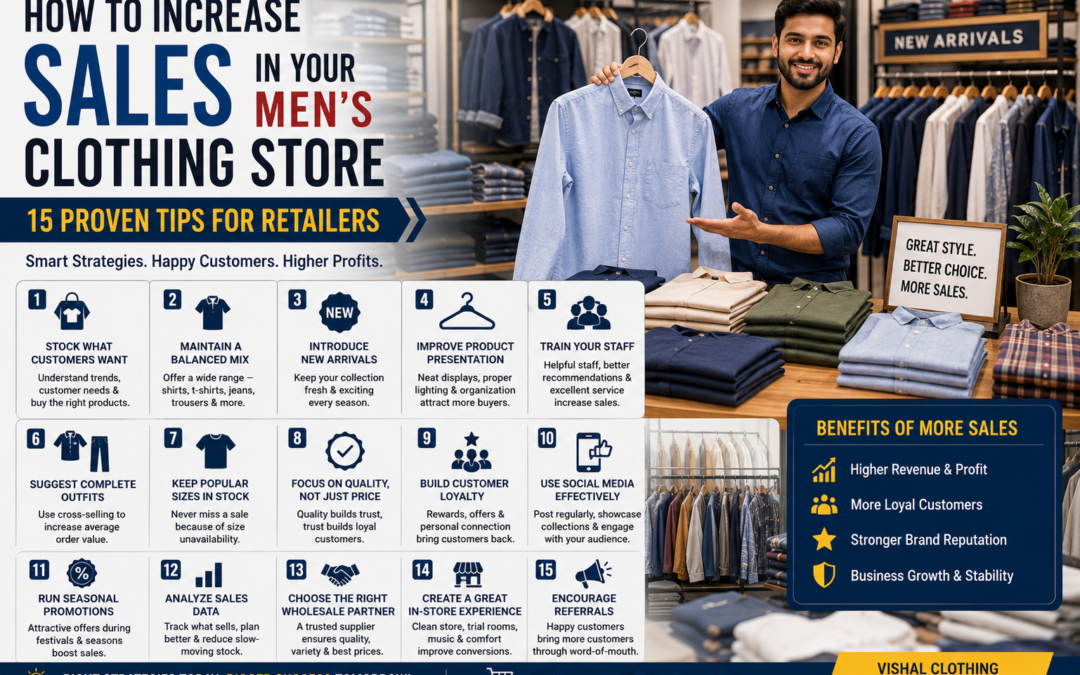
Running a men’s clothing store is exciting, but it also comes with challenges. Customer preferences change quickly, fashion trends evolve every season, and competition continues to grow. Whether you own a retail store, a wholesale outlet, or an online clothing business, increasing sales requires more than simply stocking attractive shirts and trousers.
Many retailers believe that lowering prices is the only way to sell more products. In reality, successful clothing stores focus on creating a better shopping experience, offering the right product mix, building customer trust, and understanding what their target audience truly wants.
Imagine two clothing stores located on the same street.
Both sell similar men’s shirts, T-shirts, trousers, and jeans.
The first store has helpful staff, neatly displayed products, fresh collections, and loyal customers who return regularly.
The second store has outdated inventory, poor customer service, and little attention to product presentation.
Even if both stores charge similar prices, the first store is far more likely to achieve higher sales and stronger customer loyalty.
The difference isn’t luck—it’s strategy.
This guide shares 15 proven tips that can help retailers improve customer experience, increase repeat purchases, attract new buyers, and grow profits. Whether you’re starting your first clothing business or looking to expand an established store, these practical strategies will help you build a stronger retail business.
Contents
- 1 Why Some Clothing Stores Grow Faster Than Others
- 2 Tip 1: Stock the Products Customers Actually Want
- 3 Tip 2: Maintain a Balanced Product Mix
- 4 Tip 3: Keep Introducing New Arrivals
- 5 Tip 4: Improve Product Presentation
- 6 Tip 5: Train Your Staff to Help, Not Just Sell
- 7 Tip 6: Offer Complete Outfit Suggestions
- 8 Tip 7: Keep Popular Sizes in Stock
- 9 Tip 8: Focus on Product Quality Instead of Lowest Prices
- 10 Tip 9: Build Customer Loyalty Instead of Chasing New Customers
- 11 Tip 10: Use Social Media to Bring Customers to Your Store
- 12 Tip 11: Run Seasonal Promotions Instead of Constant Discounts
- 13 Tip 12: Analyse Your Sales Data Regularly
- 14 Tip 13: Choose the Right Wholesale Supplier
- 15 Tip 14: Create a Better In-Store Shopping Experience
- 16 Tip 15: Encourage Customer Referrals
- 17 Bonus Tip: Stay Updated with Fashion Trends
- 18 Common Mistakes That Reduce Clothing Store Sales
- 19 Expert Advice from Vishal Clothing
- 20 Why Retailers Choose Vishal Clothing
- 21 Frequently Asked Questions
- 21.1 1. What is the best way to increase sales in a men’s clothing store?
- 21.2 2. How often should retailers introduce new clothing collections?
- 21.3 3. Should clothing stores focus more on quality or low prices?
- 21.4 4. How important is social media for clothing retailers?
- 21.5 5. Why is choosing the right wholesale supplier important?
- 22 Conclusion
Why Some Clothing Stores Grow Faster Than Others
Every retailer wants higher sales, but the stores that consistently outperform their competitors usually have a few things in common.
They understand that success depends on several factors working together, including:
- Stocking products customers actually want
- Keeping inventory fresh
- Delivering excellent customer service
- Creating attractive store displays
- Building long-term customer relationships
- Promoting their business consistently
Instead of relying on discounts alone, successful retailers create an environment where customers enjoy shopping and feel confident about returning.
Tip 1: Stock the Products Customers Actually Want
The biggest mistake many retailers make is buying products they personally like instead of products their customers prefer.
Fashion trends change quickly, and customer demand varies based on age, location, lifestyle, and season.
Spend time understanding your audience before purchasing inventory.
Ask yourself:
- Which products sell the fastest?
- Which colours are customers requesting?
- Which sizes frequently run out?
- Which garments remain unsold?
Use this information to guide future purchasing decisions.
Retailers who regularly analyse customer demand usually experience better inventory turnover and fewer unsold products.
Tip 2: Maintain a Balanced Product Mix
One of the easiest ways to increase sales is by offering customers more choices.
If your store only focuses on formal shirts, you may lose customers looking for casual wear or everyday essentials.
A balanced men’s clothing store should include:
Formal Shirts
Essential for office professionals, business meetings, interviews, and special occasions.
Casual Shirts
Checked shirts, printed shirts, linen shirts, and solid colours remain popular across all age groups.
Polo T-Shirts
Perfect for customers looking for a smart casual look.
Round-Neck T-Shirts
A wardrobe staple with consistent year-round demand.
Jeans
Offer regular-fit, straight-fit, and stretch denim options.
Chinos and Trousers
Comfortable and versatile trousers appeal to customers who want clothing suitable for both work and casual outings.
A complete product range encourages customers to purchase multiple items during a single visit.
Tip 3: Keep Introducing New Arrivals
Customers enjoy discovering something new.
Even loyal shoppers may stop visiting if they see the same inventory month after month.
Introducing fresh collections regularly creates excitement and gives customers a reason to return.
New arrivals don’t have to replace your best-selling products.
Instead, combine:
- Timeless best sellers
- Seasonal collections
- Trending colours
- Updated designs
- Limited-edition styles
Displaying “New Arrival” sections near the entrance also attracts attention and increases impulse purchases.
Tip 4: Improve Product Presentation
Customers often make purchasing decisions within the first few minutes of entering a store.
A clean, organised display creates a positive first impression.
Arrange products by:
- Category
- Colour
- Size
- Occasion
- Collection
For example:
Office Collection
- White shirts
- Blue shirts
- Grey trousers
- Formal belts
Weekend Collection
- Polo T-shirts
- Chinos
- Casual shirts
Summer Collection
- Linen shirts
- Cotton shirts
- Light-coloured trousers
Neatly folded garments, proper lighting, and attractive displays encourage customers to explore more products.
Tip 5: Train Your Staff to Help, Not Just Sell
Great customer service is one of the strongest competitive advantages for any retail business.
Customers appreciate staff who:
- Smile and greet them warmly
- Listen carefully
- Understand their needs
- Recommend suitable products
- Explain fabric differences
- Help with sizing
Rather than pressuring customers into making a purchase, helpful staff build trust.
Trust often leads to repeat business.
Tip 6: Offer Complete Outfit Suggestions
Many retailers lose sales by focusing on individual products instead of complete outfits.
Imagine a customer purchasing a blue formal shirt.
Instead of ending the conversation, suggest:
- Matching trousers
- A leather belt
- Formal shoes
- A matching tie
This technique, known as cross-selling, increases the average order value without requiring additional marketing.
Customers also appreciate styling advice because it simplifies their shopping experience.
Tip 7: Keep Popular Sizes in Stock
Nothing disappoints a customer more than finding the perfect shirt only to discover their size isn’t available.
Regularly analyse which sizes sell the fastest.
Maintain higher inventory for popular sizes while ensuring smaller and larger sizes remain available.
Consistent stock availability improves customer satisfaction and prevents missed sales.
Tip 8: Focus on Product Quality Instead of Lowest Prices
Many retailers believe reducing prices is the fastest way to increase sales.
However, competing only on price often reduces profit margins and attracts customers who rarely remain loyal.
Instead, focus on offering:
- Better fabrics
- Strong stitching
- Modern fits
- Attractive designs
- Reliable quality
Customers who receive value for money are more likely to return and recommend your store to others.
Quality creates long-term profitability.
Tip 9: Build Customer Loyalty Instead of Chasing New Customers
Many retailers spend all their time trying to attract new customers while forgetting about the people who have already purchased from them.
In reality, repeat customers are often the backbone of a successful clothing business. They already trust your products, understand your quality, and are more likely to recommend your store to friends and family.
Building customer loyalty doesn’t require expensive marketing campaigns. It starts with creating a positive shopping experience every time someone visits your store.
Simple Ways to Build Customer Loyalty
- Remember regular customers by name.
- Inform them when new collections arrive.
- Offer exclusive discounts for repeat purchases.
- Reward loyal customers with special offers during festive seasons.
- Provide excellent after-sales support if they have any concerns.
A satisfied customer not only returns but also becomes a valuable ambassador for your business through word-of-mouth recommendations.
Tip 10: Use Social Media to Bring Customers to Your Store
Today’s customers often discover clothing brands on social media before visiting a physical store.
Platforms such as Instagram, Facebook, and WhatsApp Business have become powerful marketing tools for retailers.
You don’t need professional photography equipment to create engaging content. High-quality smartphone photos and short videos can effectively showcase your products.
Content Ideas for Men’s Clothing Stores
- New arrival videos
- Outfit combinations
- Styling tips
- Festival collections
- Customer testimonials
- Behind-the-scenes videos
- “Best Seller of the Week” posts
- Before-and-after store displays
Posting consistently helps customers remember your brand and increases the chances of store visits.
If your store is located in Chennai or nearby areas, adding location tags and relevant hashtags can also improve local visibility.
Tip 11: Run Seasonal Promotions Instead of Constant Discounts
Many retailers believe offering discounts throughout the year is the easiest way to increase sales.
However, continuous discounts often reduce perceived value and lower profit margins.
Instead, create promotions around important shopping periods.
Examples include:
Summer Collection Sale
Promote cotton shirts, linen shirts, polo T-shirts, and lightweight clothing.
Festival Offers
Create attractive packages during Diwali, Pongal, Eid, Christmas, and New Year.
Wedding Season Collections
Highlight premium shirts, trousers, blazers, and formal wear suitable for celebrations.
End-of-Season Clearance
Offer discounts on older inventory to make space for new collections.
Limited-time promotions create urgency and encourage customers to make purchasing decisions sooner.
Tip 12: Analyse Your Sales Data Regularly
Successful retailers don’t rely on guesswork.
They use data to make smarter business decisions.
Review your sales reports every month and ask important questions such as:
- Which products sold the most?
- Which colours were most popular?
- Which sizes frequently sold out?
- Which products remained unsold?
- Which suppliers provided the best-performing products?
This information helps you improve future purchasing decisions and avoid investing in slow-moving inventory.
For example, if navy blue formal shirts consistently outperform other colours, increasing stock for that category may lead to higher sales.
Small improvements based on data often produce significant long-term results.
Tip 13: Choose the Right Wholesale Supplier
Your supplier plays a major role in determining the success of your clothing business.
Even excellent marketing cannot compensate for poor-quality products or inconsistent inventory.
A reliable wholesale supplier should provide:
- Premium-quality garments
- Competitive wholesale pricing
- Consistent product quality
- Fast deliveries
- Updated fashion collections
- Reliable inventory availability
- Professional customer support
Choosing the right supplier allows retailers to focus on growing their business rather than solving inventory problems.
Long-term partnerships often lead to better pricing, priority service, and access to exclusive collections.
Tip 14: Create a Better In-Store Shopping Experience
Customers don’t just buy clothing—they buy an experience.
A clean, welcoming, and organised store encourages customers to spend more time browsing, which often leads to higher sales.
Improve Your Store Experience By:
- Keeping displays neat and organised.
- Using bright lighting.
- Maintaining clean trial rooms.
- Playing soft background music.
- Displaying coordinated outfit combinations.
- Ensuring products are easy to locate.
Small improvements in presentation can significantly influence purchasing decisions.
Customers are more likely to return to stores where shopping feels enjoyable and effortless.
Tip 15: Encourage Customer Referrals
Happy customers are one of the most effective forms of advertising.
People naturally trust recommendations from friends and family more than traditional advertisements.
Encourage referrals by:
- Asking satisfied customers to recommend your store.
- Providing referral discounts.
- Offering small rewards for successful referrals.
- Creating memorable shopping experiences worth sharing.
A single satisfied customer can introduce several new buyers to your business over time.
Bonus Tip: Stay Updated with Fashion Trends
Fashion changes quickly, and retailers who ignore new trends often struggle to attract younger customers.
Stay informed by:
- Following fashion magazines.
- Watching industry events.
- Monitoring social media trends.
- Speaking with your wholesale supplier.
- Observing customer preferences.
Combining timeless classics with modern collections helps maintain a balanced inventory that appeals to different customer groups.
Common Mistakes That Reduce Clothing Store Sales
Many retailers unknowingly make mistakes that affect their long-term growth.
Avoid these common problems.
Buying Inventory Without Research
Purchase products based on customer demand rather than personal preferences.
Ignoring Slow-Moving Stock
Regularly identify products that aren’t selling and create promotional strategies before they become outdated.
Poor Customer Service
Customers remember how they were treated more than the price they paid.
Friendly service creates lasting relationships.
Depending Only on Walk-In Customers
Use social media, WhatsApp Business, Google Business Profile, and local marketing to reach new audiences.
Choosing Price Over Quality
Low-quality garments may generate short-term sales but often reduce customer trust and repeat business.
Quality remains one of the strongest competitive advantages in the clothing industry.
Expert Advice from Vishal Clothing
Over the years, we’ve worked with retailers of different sizes—from newly opened clothing shops to well-established businesses serving thousands of customers.
One lesson remains consistent across every successful retailer:
Growth comes from building relationships, not simply making sales.
Retailers who focus on quality products, honest pricing, excellent customer service, and fresh collections consistently outperform those who rely only on discounts.
At Vishal Clothing, we believe a strong wholesale partnership helps retailers grow faster. By providing premium-quality men’s garments, regularly updated collections, and dependable service, we aim to help our retail partners build long-term customer trust and sustainable profitability.
Why Retailers Choose Vishal Clothing
Choosing the right wholesale partner is one of the most important decisions for any clothing retailer.
Vishal Clothing has become a trusted choice because we focus on delivering products that retailers can confidently recommend to their customers.
Our strengths include:
- Premium-quality men’s shirts, T-shirts, trousers, jeans, and casual wear
- Competitive wholesale pricing
- Wide variety of styles, colours, and sizes
- Regularly updated fashion collections
- Reliable inventory availability
- Fast order processing
- Consistent product quality
- Friendly customer support
- Long-term partnerships with retailers
Whether you’re opening your first men’s clothing store or expanding an existing business, Vishal Clothing provides the products and support needed to help you grow with confidence.
Frequently Asked Questions
1. What is the best way to increase sales in a men’s clothing store?
The most effective strategy is to combine quality products, excellent customer service, fresh inventory, attractive product displays, and consistent marketing. Focusing on customer satisfaction leads to repeat purchases and long-term business growth.
2. How often should retailers introduce new clothing collections?
Introducing new arrivals every few weeks or at least once each season keeps customers interested and encourages repeat visits. Fresh collections also help retailers stay aligned with changing fashion trends.
3. Should clothing stores focus more on quality or low prices?
Quality should always be the priority. Customers are more likely to return and recommend your store when they receive durable, well-designed garments that offer good value for money.
Social media plays a significant role in attracting new customers and showcasing new collections. Regular posts featuring products, styling ideas, and promotions help increase brand awareness and drive store visits.
5. Why is choosing the right wholesale supplier important?
A dependable wholesale supplier ensures consistent product quality, competitive pricing, reliable inventory, and timely deliveries. This allows retailers to meet customer expectations and grow their business more effectively.
Conclusion
Increasing sales in your men’s clothing store isn’t about relying on discounts or following every fashion trend. It’s about understanding your customers, stocking the right products, delivering exceptional service, and creating an enjoyable shopping experience that encourages people to return.
From maintaining a balanced product mix and introducing fresh collections to using social media effectively and partnering with a trusted wholesale supplier, every small improvement contributes to long-term success. Retailers who continuously analyse customer preferences, adapt to changing fashion trends, and invest in quality are better positioned to build loyal customer relationships and achieve sustainable growth.
If you’re looking for a wholesale partner that understands the needs of modern retailers, Vishal Clothing offers premium-quality men’s apparel, competitive pricing, reliable inventory, and regularly updated collections. With the right products and the right partnership, your clothing store can attract more customers, increase sales, and continue growing year after year.